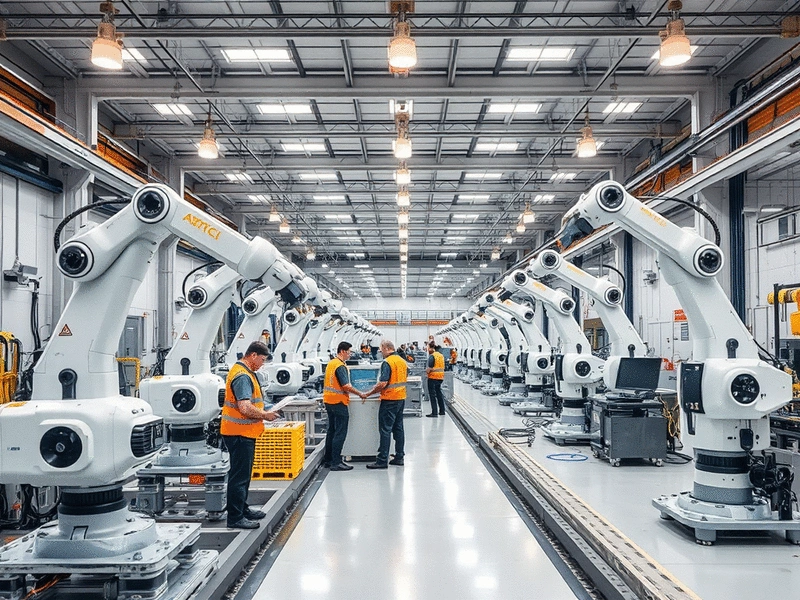
Automation Enhancements
AI automates repetitive tasks, freeing teams for strategic initiatives.
In a world where technological advancements shape our future, the manufacturing sector stands at the forefront of transformation. With over 80% of manufacturers implementing automation in recent years, the landscape is evolving rapidly. How can AI redefine productivity in this sector? Let’s explore the pivotal lessons learned from this shift.
Artificial Intelligence (AI) is fundamentally transforming manufacturing productivity. The visual below highlights key areas where AI makes a significant impact, driving efficiency and fostering innovation.
AI automates repetitive tasks, freeing teams for strategic initiatives.
Harnessing data for informed decisions and optimized strategies.
AI analyzes equipment data to prevent breakdowns and minimize downtime.
Real-time monitoring ensures consistent quality control, reducing defects.
Artificial Intelligence (AI) is revolutionizing the manufacturing sector, creating opportunities for increased productivity and operational efficiency. At Upbeat Industry, we celebrate these advancements by sharing stories of innovation that highlight how AI is reshaping our industry. But what does AI truly mean in the context of manufacturing? Let’s dive deeper into this transformative technology.
In manufacturing, Artificial Intelligence encompasses a range of technologies that enable machines to mimic human intelligence. This includes systems that can learn from data, adapt to new inputs, and even simulate human reasoning. By integrating AI, manufacturers can automate processes, enhance quality control, and ultimately drive efficiencies that were previously unimaginable.
These elements work together to create smarter factories that can respond to changing market demands and optimize production processes. Embracing these AI technologies is crucial for the modern manufacturer aiming for success in today’s competitive landscape.
At Upbeat Industry, we see the deployment of AI as a game-changer for operational efficiency. By utilizing AI, manufacturers can reduce waste and increase output without sacrificing quality. For instance, automated systems can analyze production data in real-time, allowing managers to make informed decisions quickly.
These efficiencies not only lower operational costs but also enhance the overall productivity of manufacturing processes. Imagine having a system that not only tells you when a machine is likely to fail but also suggests the best time to service it, ensuring that your production line runs smoothly!
Industry 4.0 is not just a buzzword; it's a clear representation of the future direction of manufacturing, with AI at its core. This fourth industrial revolution is characterized by the interconnectivity of machines, data, and people. By integrating AI into this ecosystem, manufacturers are poised to unlock unprecedented levels of efficiency and innovation.
As we embrace this shift towards Industry 4.0, it's essential for manufacturers to understand the profound impact of AI on productivity. This transition not only fosters innovation but also empowers teams to focus on higher-value tasks, ultimately leading to a more dynamic and resilient industrial landscape.
Did you know? Over 80% of manufacturers have successfully implemented some level of automation in the past year. This trend highlights the growing recognition of AI's potential to enhance productivity and operational efficiency. Consider starting with small-scale AI projects to test its impact on your operations before committing to larger implementations!
Artificial Intelligence (AI) is no longer just a buzzword; it has fundamentally transformed manufacturing productivity across various sectors. With capabilities to automate processes, enhance decision-making, and optimize resource use, AI plays a pivotal role in the modern factory landscape. As we delve deeper into this transformation, it’s essential to understand the key takeaways that highlight AI's influence in the industry.
These key points illustrate how AI is reshaping the manufacturing landscape, driving efficiency and fostering a culture of innovation. At Upbeat Industry, we believe that embracing these changes will pave the way for a robust and sustainable industrial future.
As we look ahead, it’s crucial for manufacturers to recognize the potential of AI as a catalyst for sustainable growth. By integrating AI technologies, businesses not only enhance their productivity but also cultivate resilience in a rapidly evolving market. I encourage every manufacturer to explore how AI can fit into their operations, unlocking opportunities for innovation and improvement!
In my experience, success comes from taking proactive steps. Those who adapt quickly will undoubtedly lead the charge in the industrial sector, showcasing the transformative power of AI. Are you ready to be part of this exciting journey?
In manufacturing, AI encompasses technologies that allow machines to mimic human intelligence, enabling them to learn from data, adapt to new inputs, and simulate human reasoning. This includes machine learning, robotics, and natural language processing to automate processes and enhance quality control.
AI enhances productivity by automating repetitive tasks, enabling data-driven decisions through machine learning, facilitating predictive maintenance to minimize downtime, and ensuring consistent quality control through real-time monitoring.
Industry 4.0 is the fourth industrial revolution characterized by the interconnectivity of machines, data, and people. AI is central to Industry 4.0, powering smart factories, advanced analytics, and collaborative robots (cobots) to achieve unprecedented levels of efficiency and innovation.
The key benefits include real-time data analysis for informed decision-making, automation of repetitive tasks to free up human resources, and predictive analytics to foresee maintenance needs, all of which contribute to lower operational costs and enhanced overall productivity.
Effective strategies for AI implementation include assessing your specific operational needs, starting with small pilot projects, fostering a culture of innovation within your team, and collaborating with AI specialists to guide the integration process.
Implementing AI in your manufacturing processes may seem daunting, but it doesn’t have to be! Here are some key strategies to ensure a smooth integration:
By following these strategies, manufacturers can successfully navigate the initial stages of AI adoption and set themselves up for long-term success.
Your journey into AI integration can become even richer through shared experiences! I invite manufacturers to share their stories—what worked, what didn’t, and how AI has impacted your productivity. Engaging in this conversation not only fosters community but also aids in collective learning.
Finally, one of the most significant advantages of AI lies in its ability to leverage data analytics for continuous improvement. By consistently analyzing production metrics and operational data, manufacturers can identify trends, predict outcomes, and make informed adjustments. This cycle of feedback ultimately leads to ongoing enhancements in efficiency and quality.
As we continue to celebrate the optimistic narratives within our industry, let’s remember that AI is a powerful tool for unlocking potential. Together, we can reshape the future of manufacturing, ensuring that our sector thrives in the years to come! Are you ready to take the next step?
Here is a quick recap of the important points discussed in the article:
Nathaniel Becker is a passionate advocate for the manufacturing sector, dedicated to uncovering and sharing stories of innovation and success across the global industrial landscape. With a keen eye for emerging trends and a background in industrial reporting, Nathaniel aims to inspire confidence in the future of manufacturing through compelling narratives and insightful analyses.


